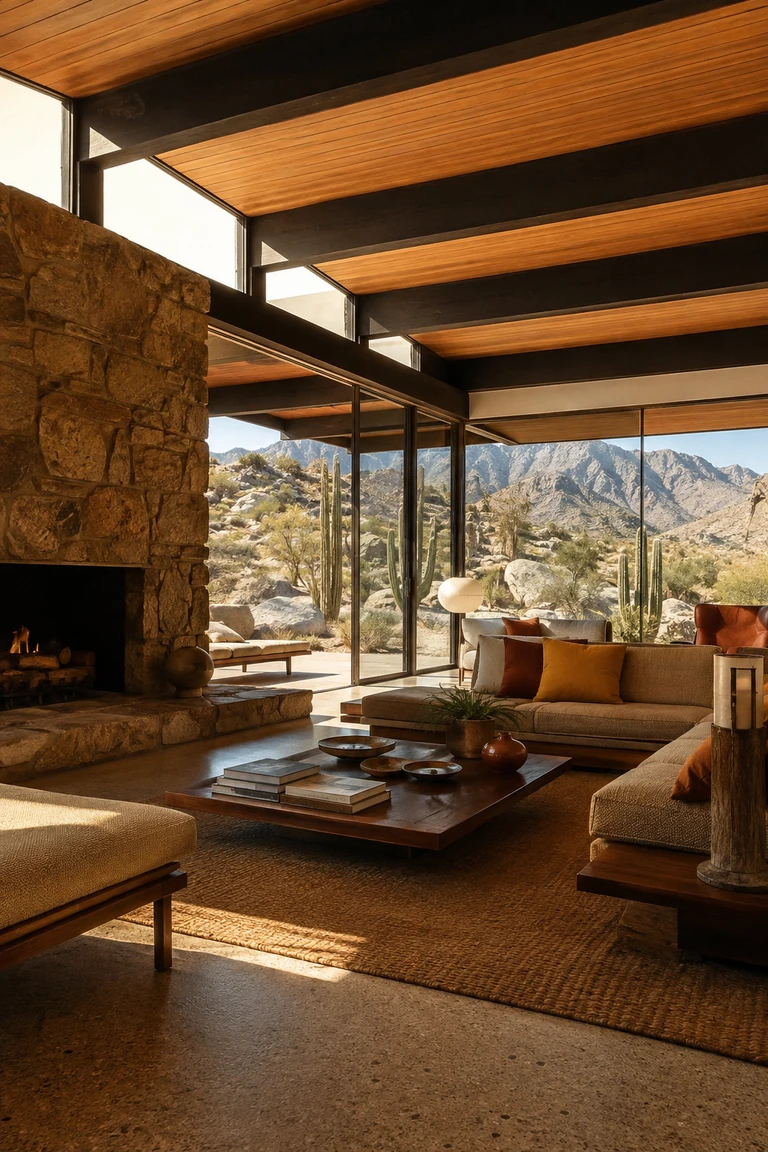
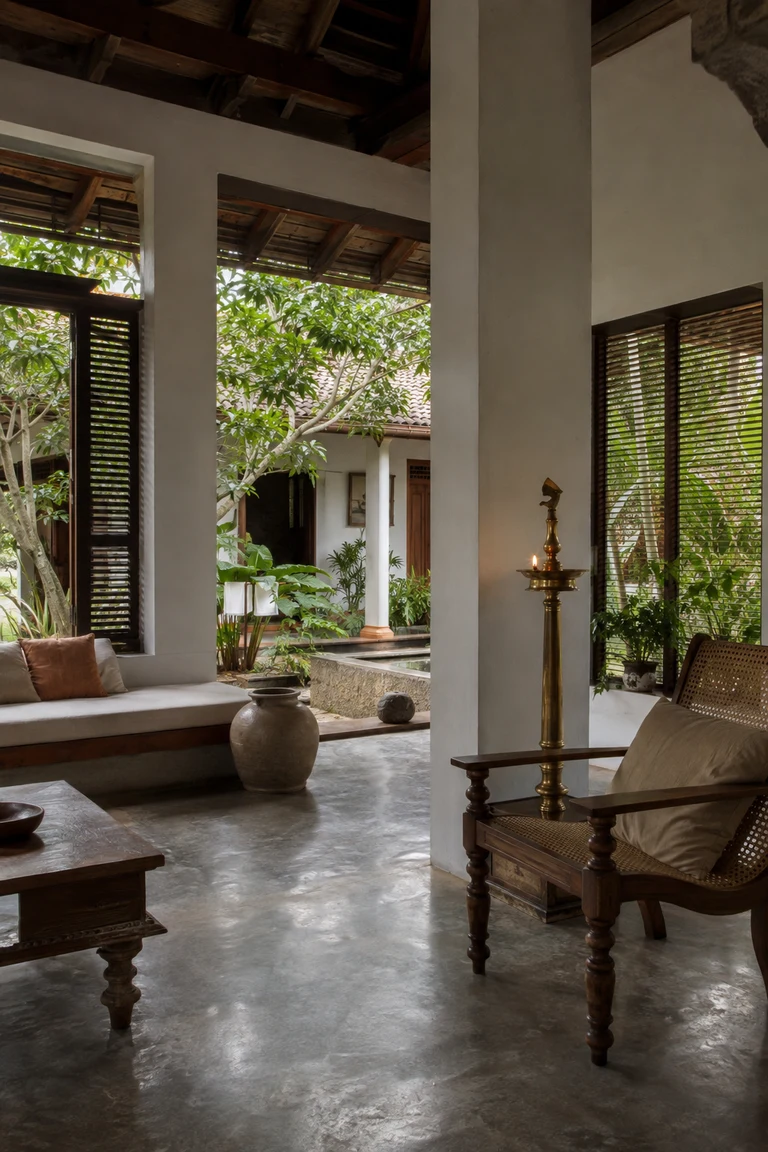
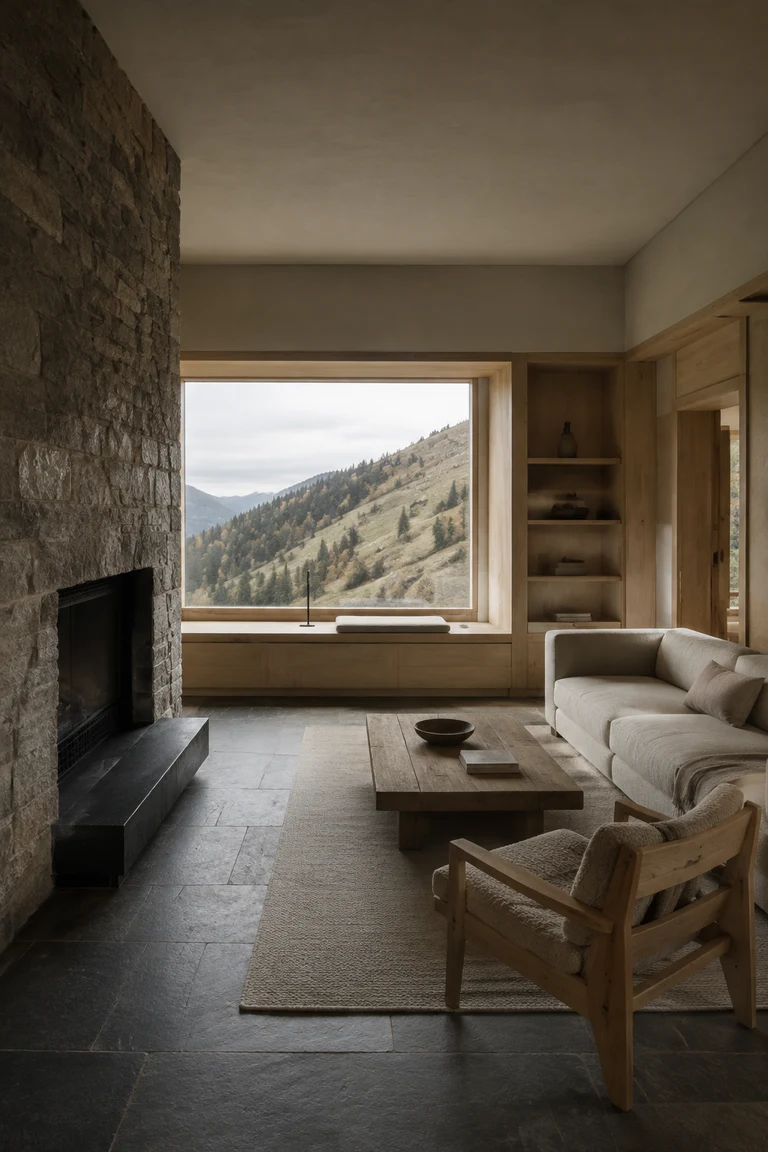
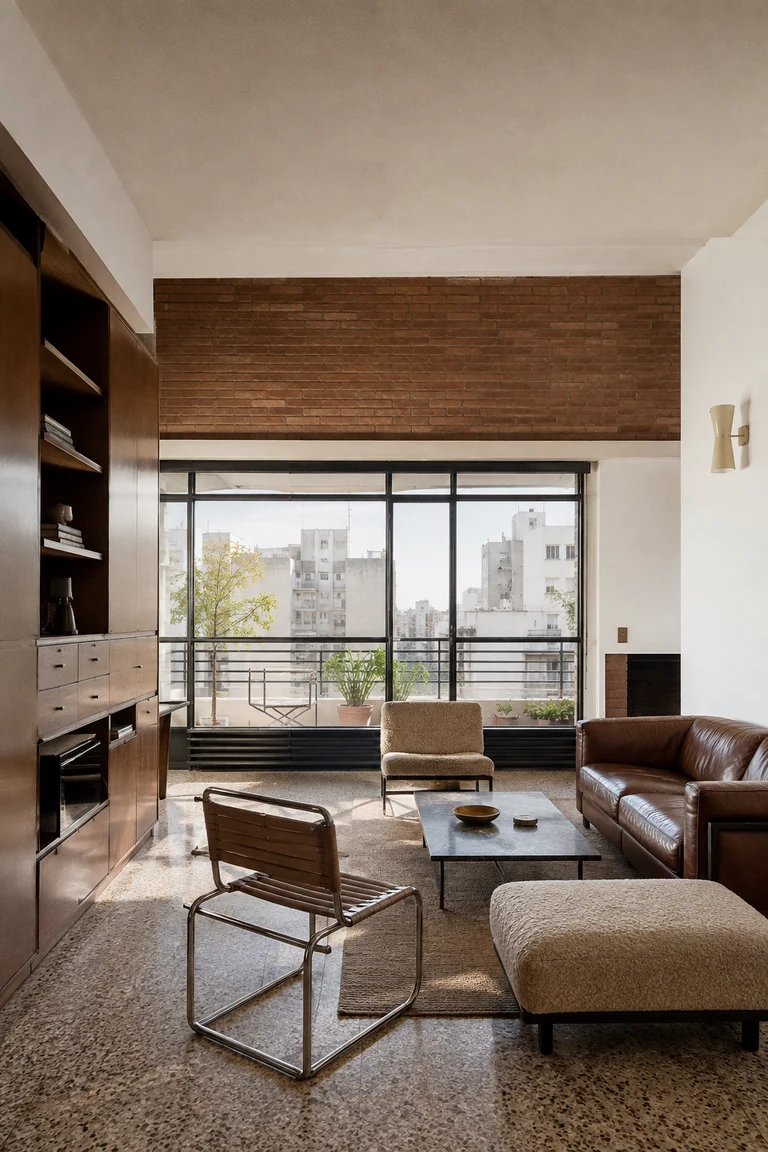
Minimal and natural · International practice · 1960s onward
Minimalism
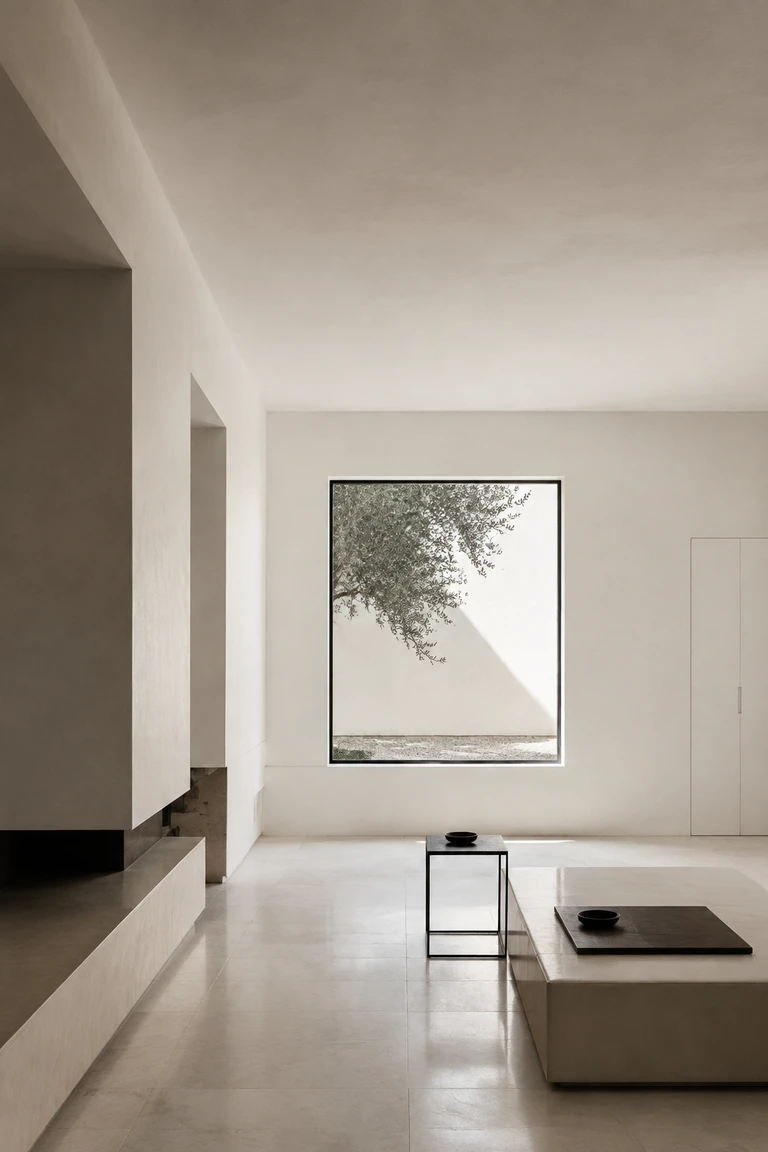
Minimalism interiors reduce rooms to proportion, light, continuous surface, and a small number of precisely placed functional objects.
- Archive
- 13
- Mood
- Minimal and natural
02 Field note
How the room is composed
- layout
- Long sightlines, aligned openings, concealed storage, and generous negative space make the room’s volume and circulation more prominent than its contents.
- materials
- Smooth plaster, pale limestone, concrete, clear glass, blackened steel, fine timber veneer, and tightly woven natural textiles favour continuity and exact junctions.
- furniture
- Low rectilinear benches, monolithic tables, frameless cabinets, and isolated chairs use elementary geometry and avoid visible mechanisms or decorative trim.
- lighting
- Large singular openings, concealed coves, recessed wall washes, and a few sharply directed lamps reveal plane, depth, and texture without becoming focal objects.
- decoration
- One vessel, restrained artwork, or dark functional object may anchor the room; repetition, clutter, and applied pattern are deliberately excluded.
03 Related rooms
Continue across shared lineages
Neighbors combine mood, historical chapter, material routes, and overlapping palette families.