Minimal and natural · Japan · vernacular tradition before the 20th century
Japanese minka
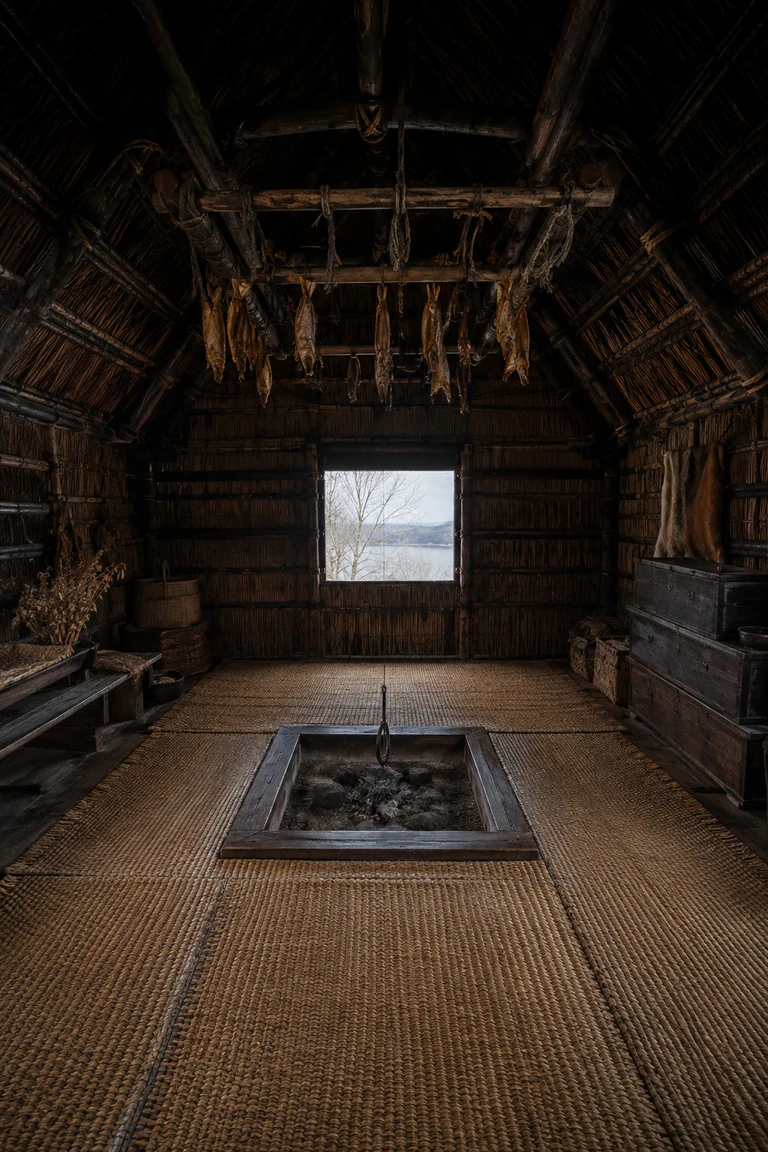
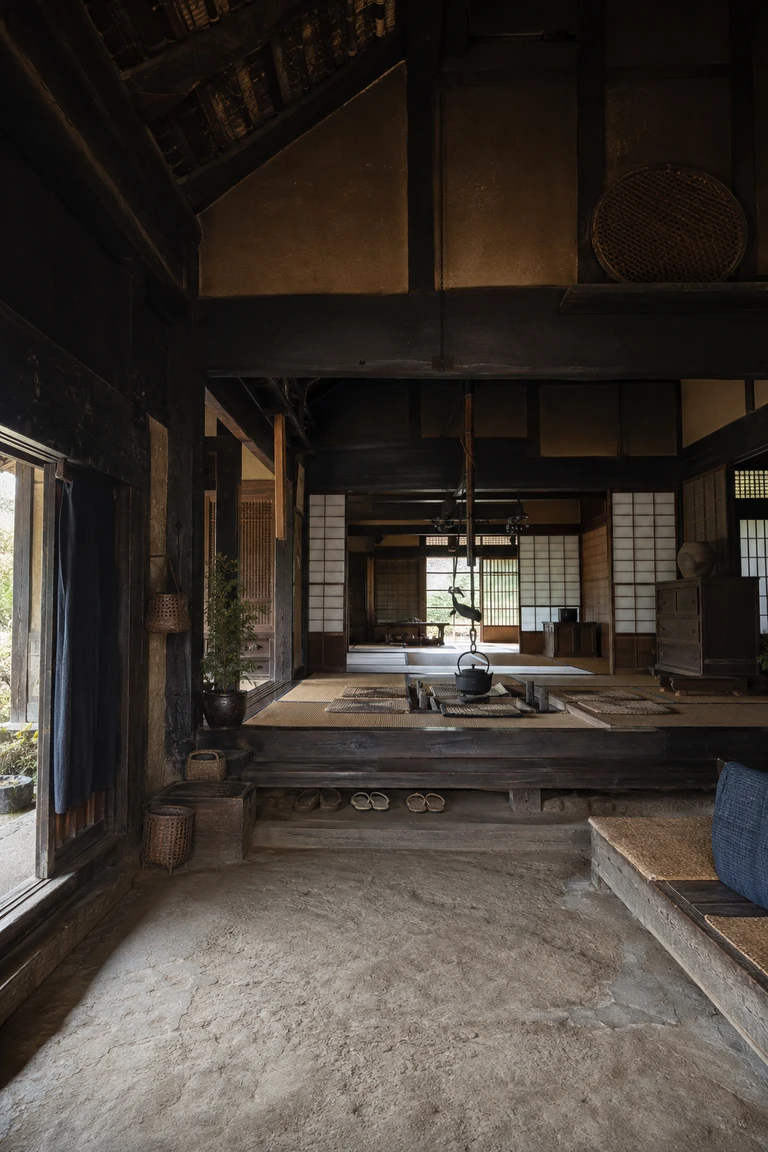
Japanese minka interiors organize daily life around an earthen threshold, raised tatami rooms, exposed timber structure, and movable paper screens.
- Archive
- 12
- Mood
- Minimal and natural
02 Field note
How the room is composed
- layout
- A broad earthen doma meets raised living platforms, while sliding shoji and fusuma vary the size, privacy, and seasonal use of connected rooms.
- materials
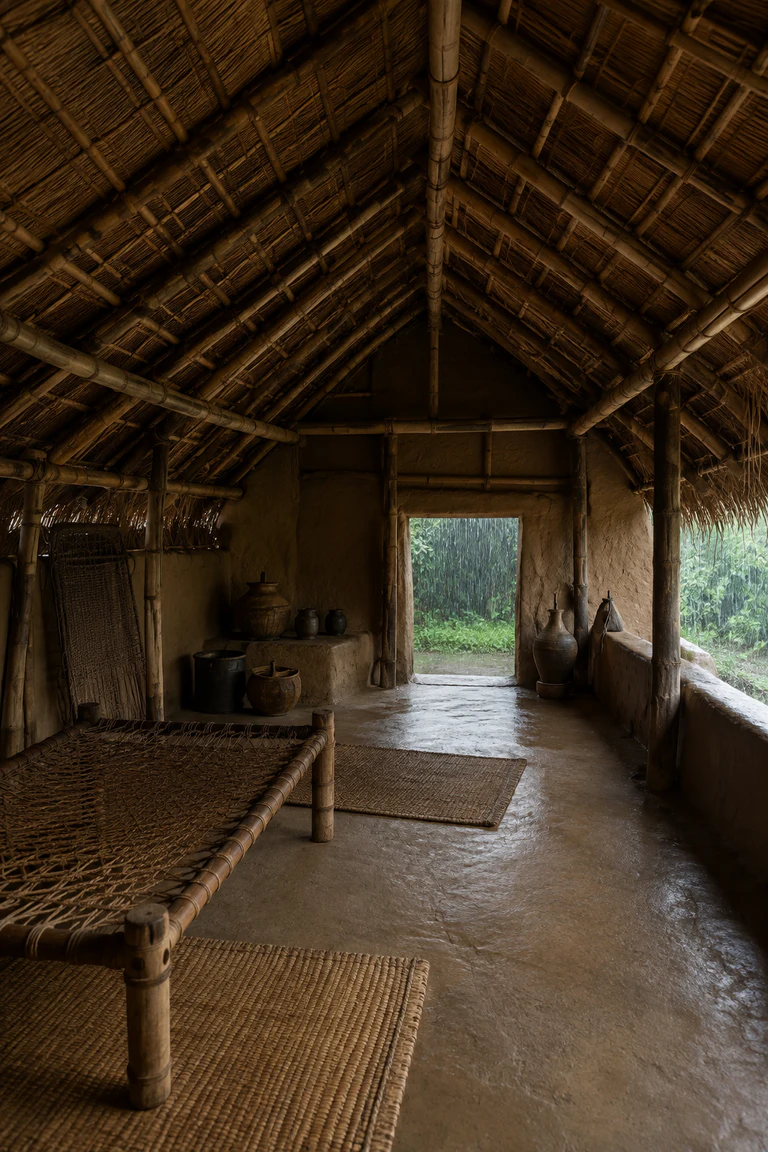
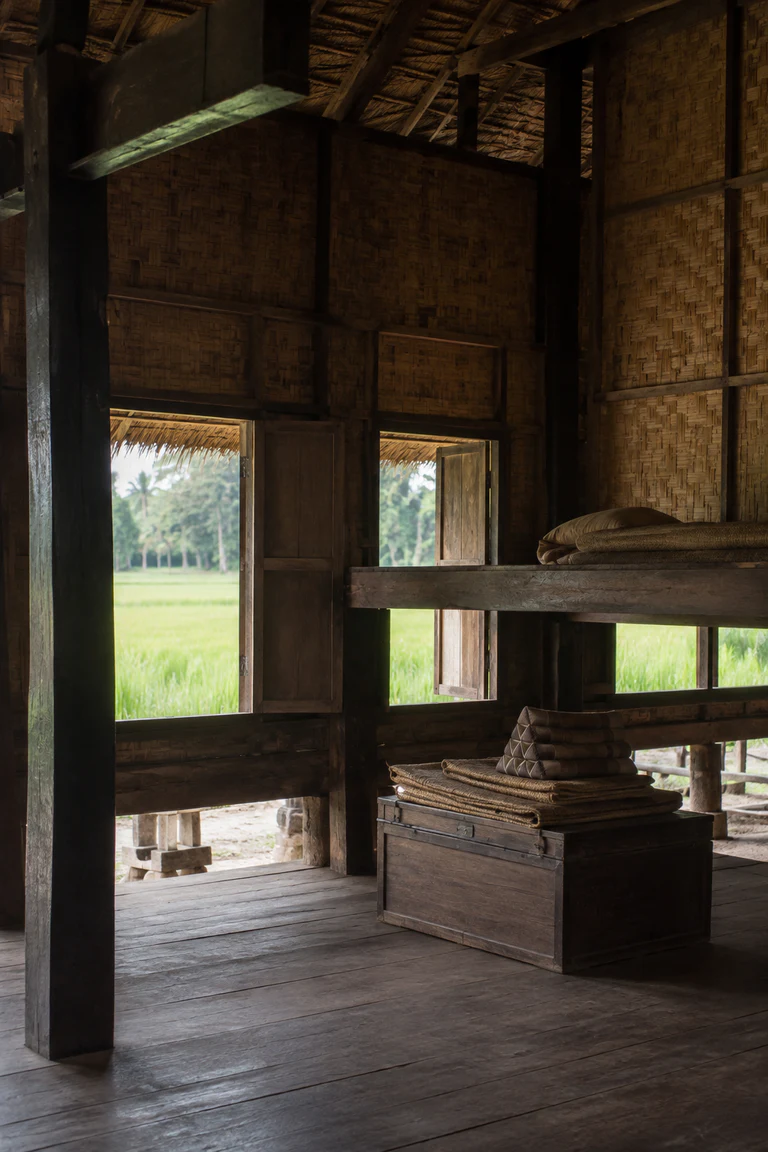
- Hand-hewn timber, packed earth, straw tatami, bamboo, clay plaster, handmade paper, iron, rush, and cotton reveal construction through durable natural surfaces.
- furniture
- Low timber tables, floor cushions, storage chests, woven stools, and a small number of portable objects keep the raised rooms flexible and visually open.
- lighting
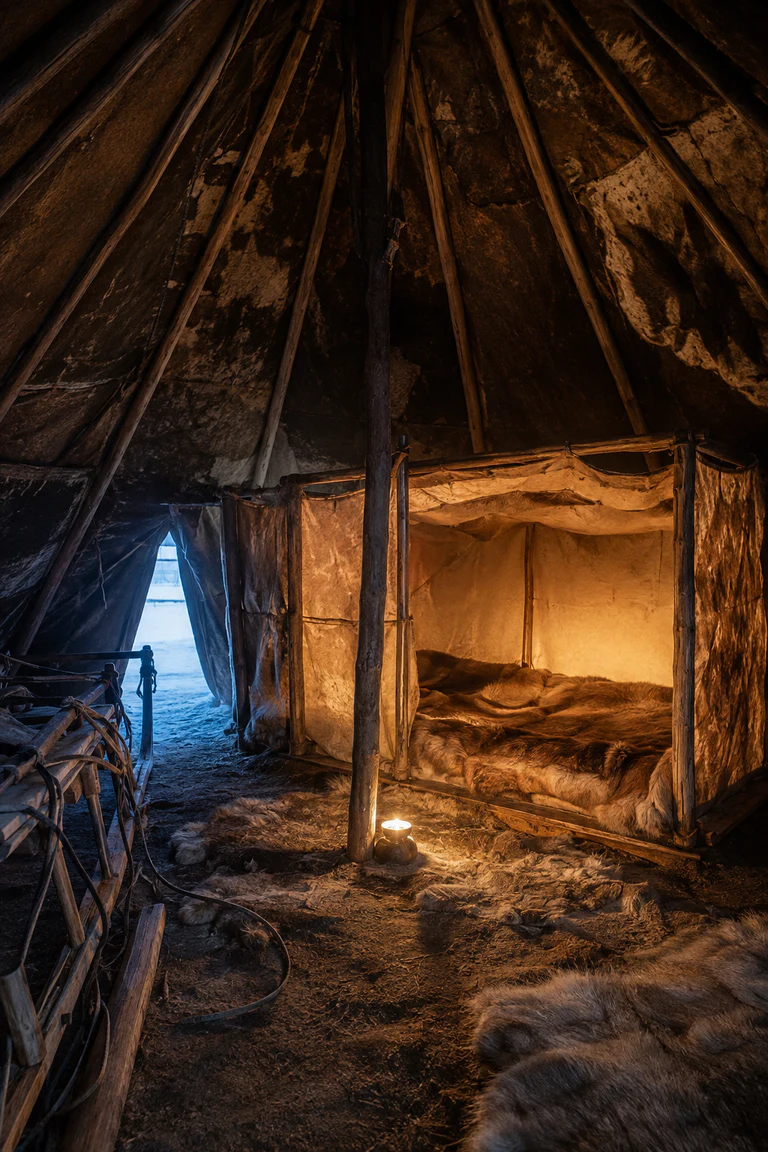
- Deep eaves and translucent paper screens soften daylight, while the open hearth and modest pendant or lantern provide concentrated warm light after dark.
- decoration
- An iron kettle, seasonal branch, indigo textile, basketry, and functional ceramics give the spare interior texture without concealing its structural rhythm.
03 Related rooms
Continue across shared lineages
Neighbors combine mood, historical chapter, material routes, and overlapping palette families.