Architectural and formal · Europe and United States · 1760s–1830s
Neoclassical
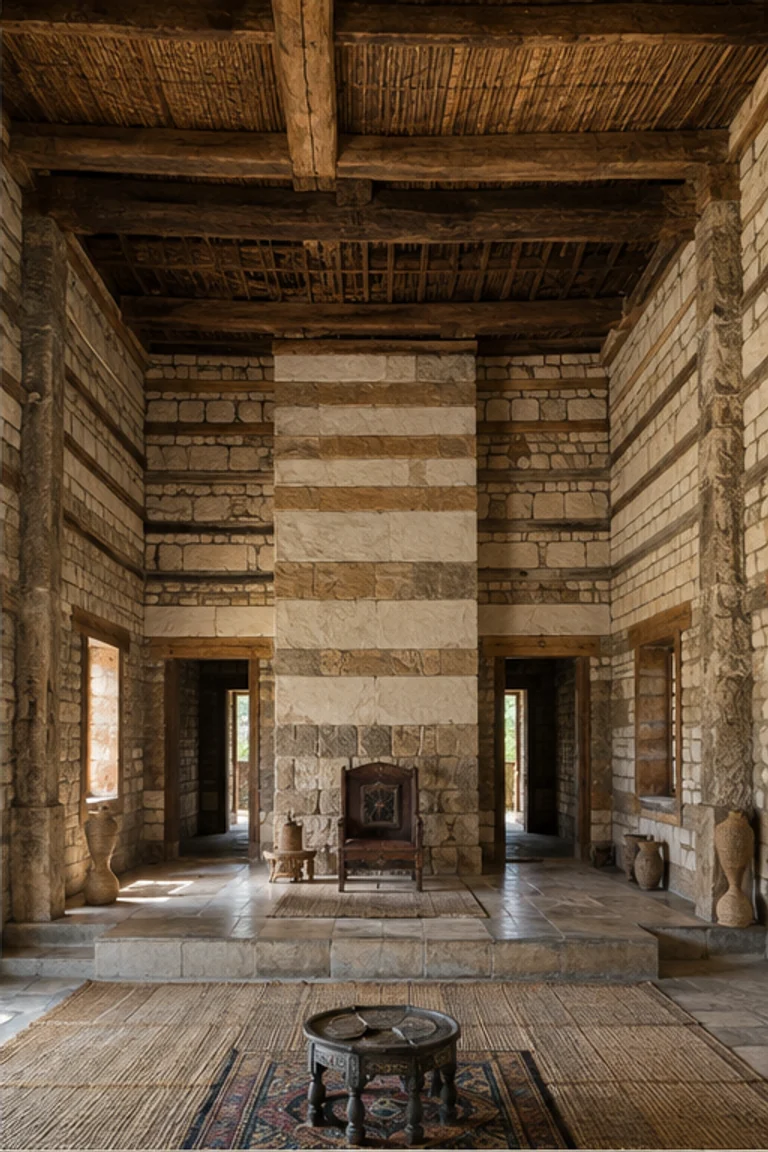
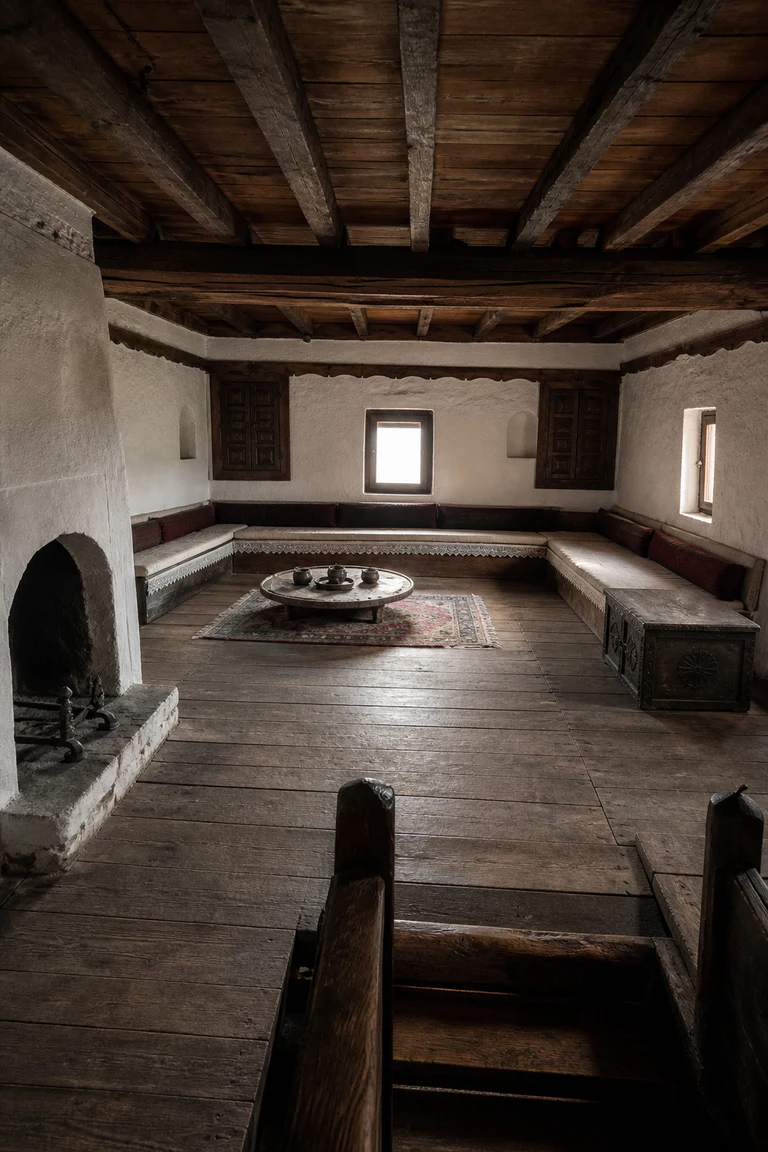
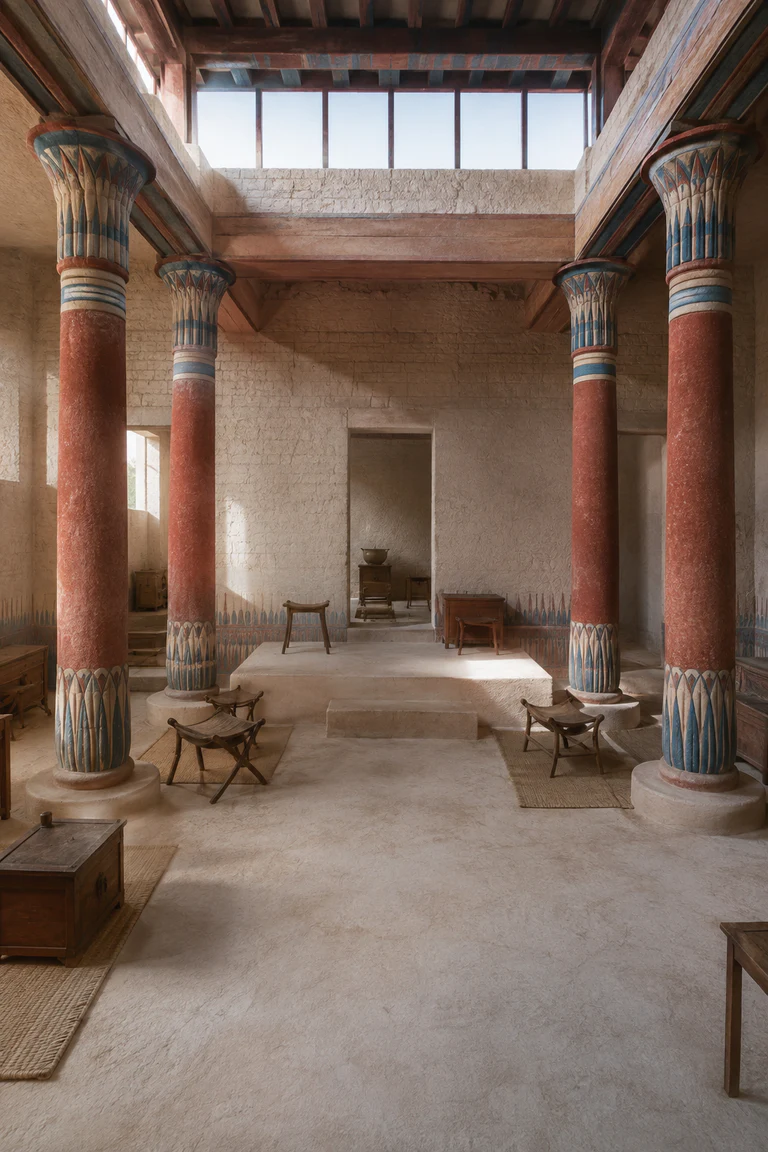
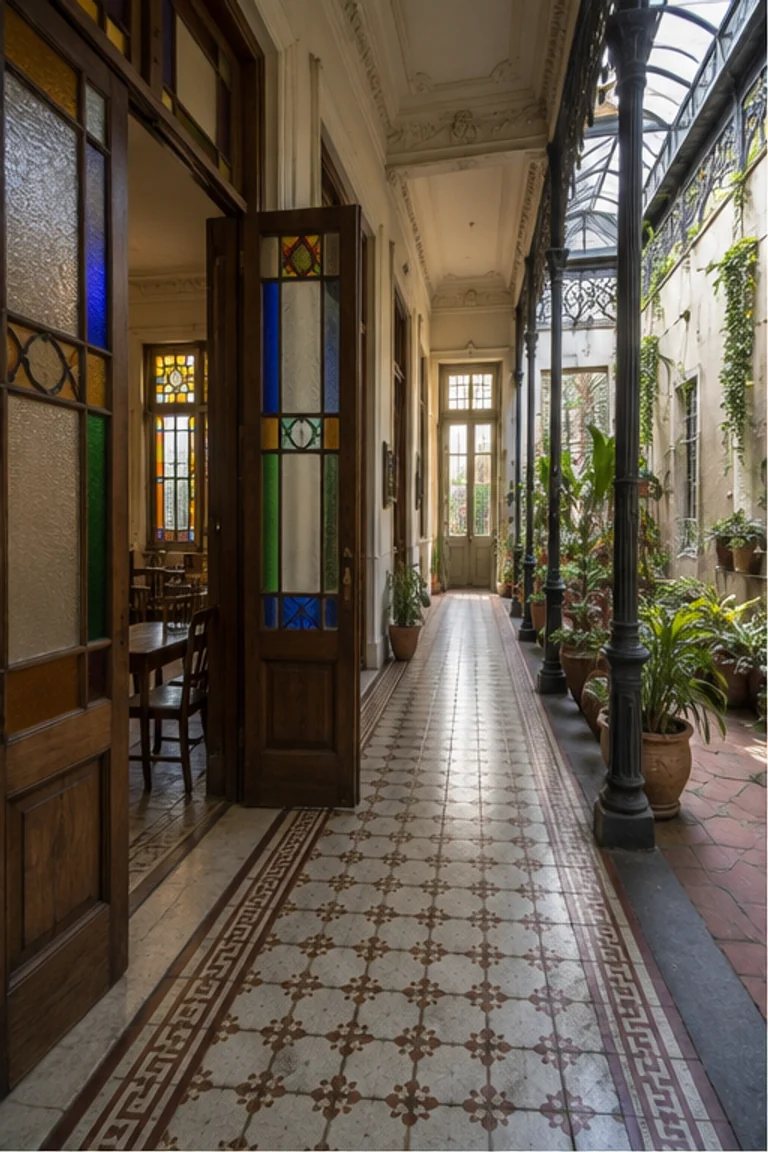
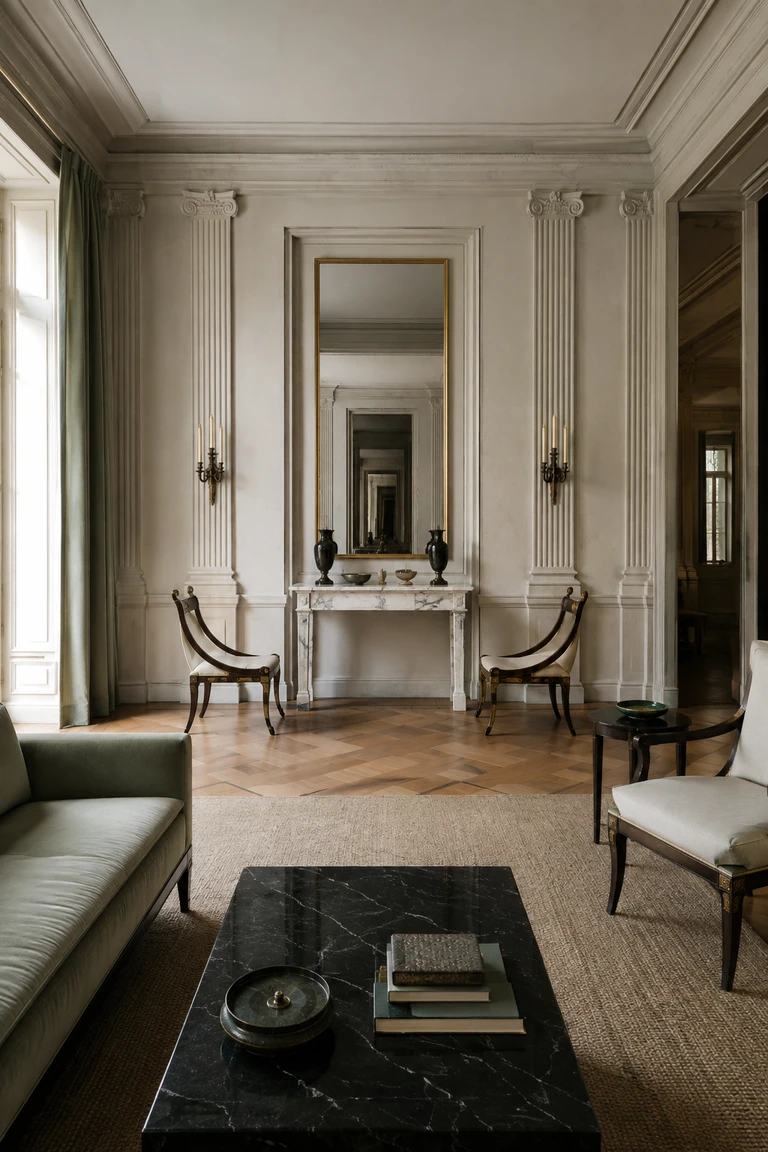
Neoclassical interiors use archaeological references, axial symmetry, measured ornament, and pale architectural surfaces to create rooms of disciplined civic proportion.
- Archive
- 208
- Mood
- Architectural and formal
02 Field note
How the room is composed
- layout
- Rooms follow strong central axes with paired openings, balanced furniture groups, and clear wall fields shaped by pilasters, niches, and proportional panels.
- materials
- Painted plaster, fine hardwood parquet, white and dark marble, gilt bronze, silk, linen, mahogany, and restrained painted decoration convey polished permanence.
- furniture
- Klismos-inspired chairs, slender console tables, daybeds, pedestal tables, and rectilinear cabinets use tapered forms and controlled classical detail.
- lighting
- Tall windows provide even daylight while paired sconces, bronze lamps, and restrained chandeliers reinforce the room’s architectural symmetry.
- decoration
- Classical urns, profile medallions, linear friezes, mirrors, and a small number of landscapes or archaeological prints occupy clearly bounded positions.
03 Related rooms
Continue across shared lineages
Neighbors combine mood, historical chapter, material routes, and overlapping palette families.