Architectural and formal · Prague · 1911–1920s
Czech Cubism
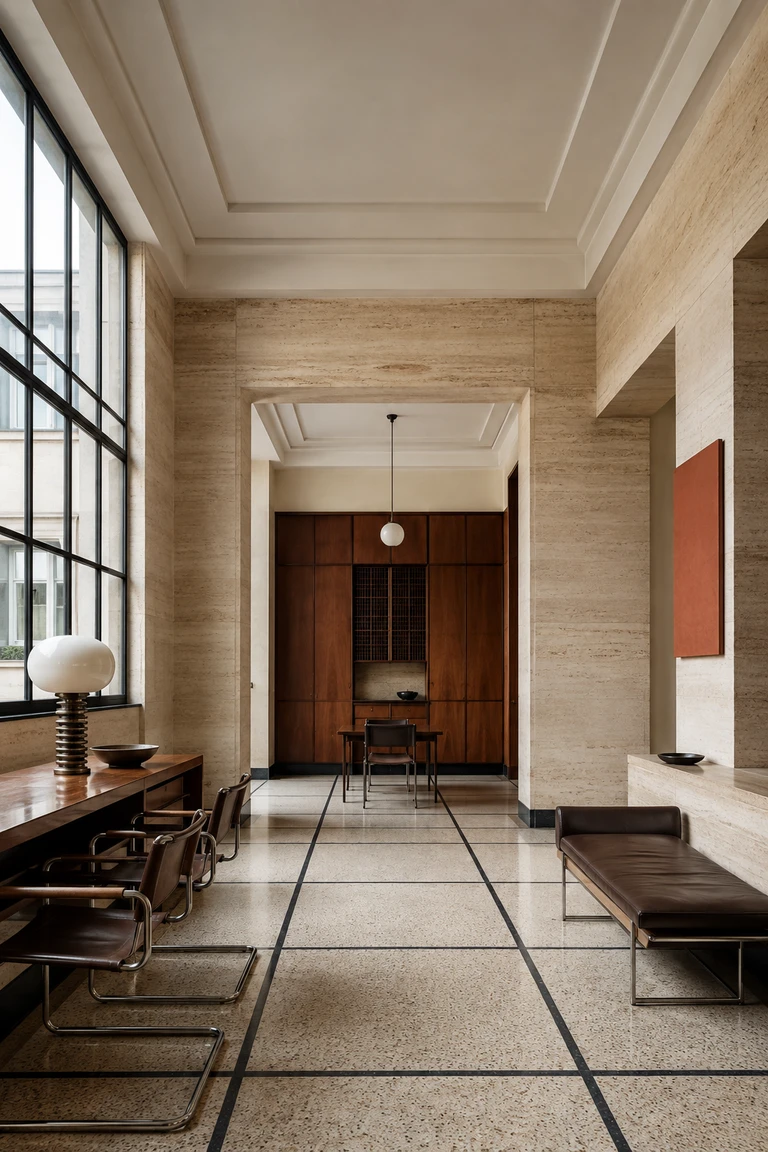
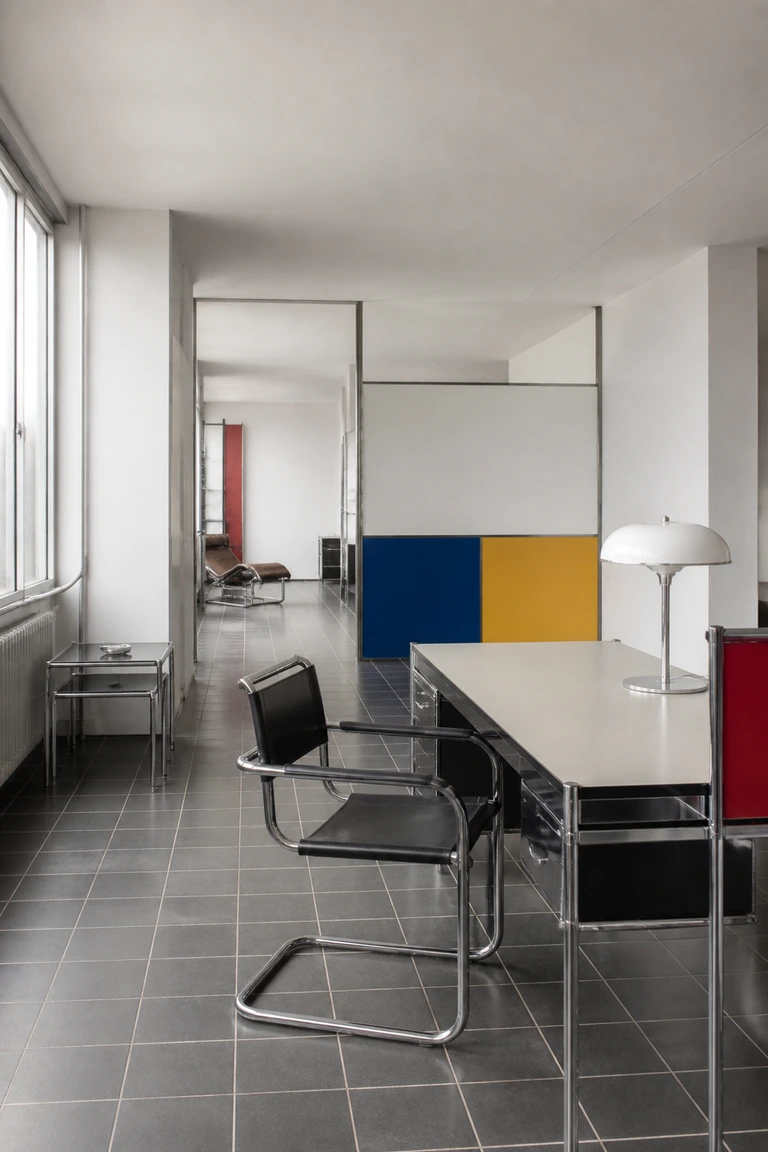
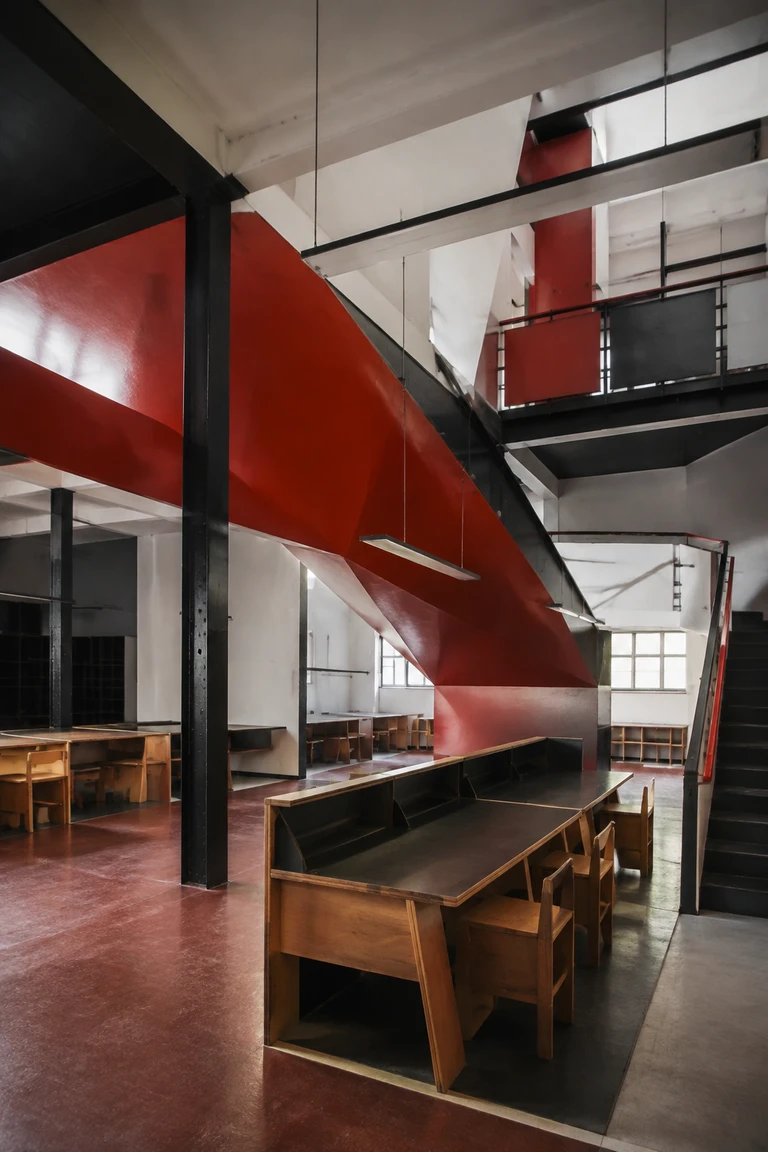
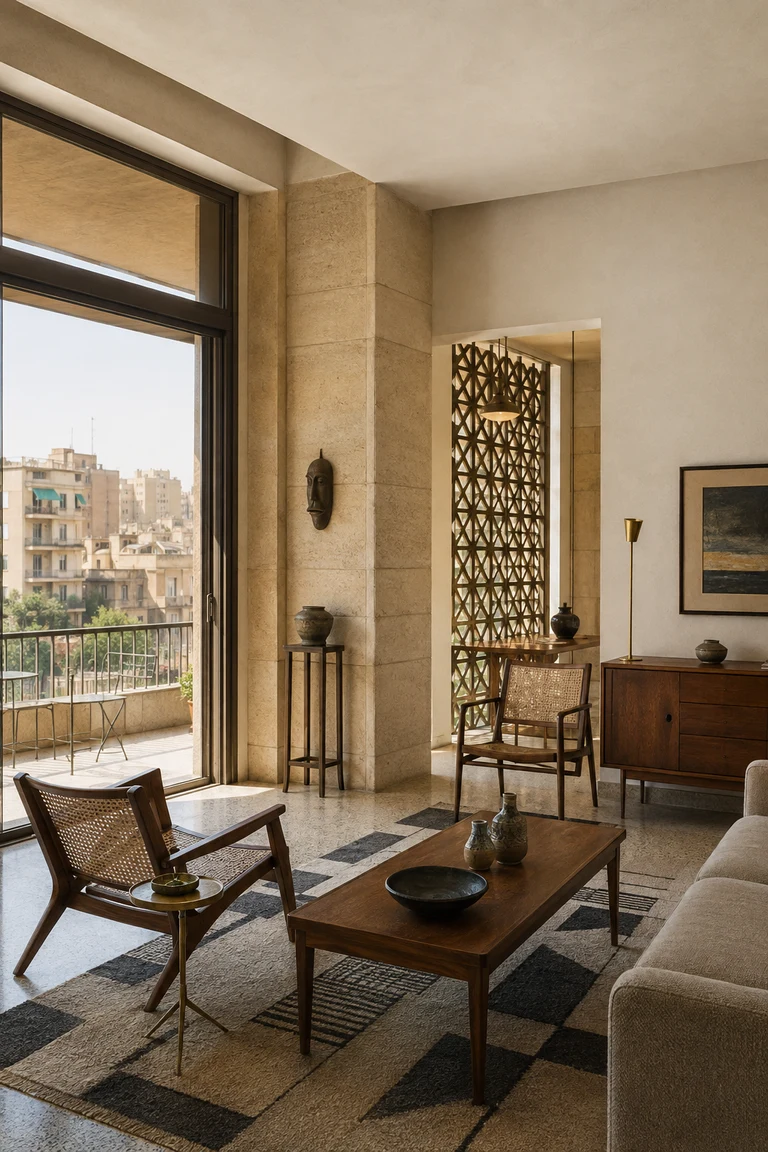
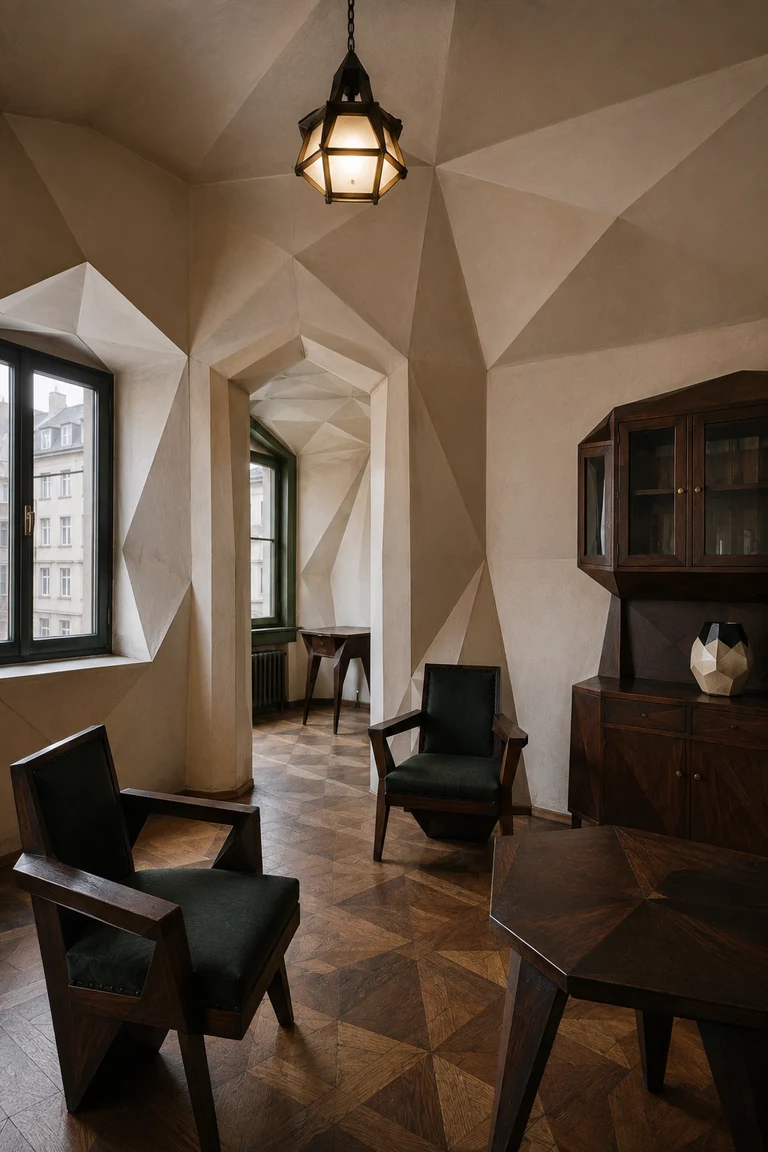
Czech Cubism interiors translate crystalline faceting into walls, door frames, furniture, and fittings, using disciplined angular geometry to make an entire domestic room feel dynamically modelled.
- Archive
- 223
- Mood
- Architectural and formal
02 Field note
How the room is composed
- layout
- Conventional salon and dining arrangements are sharpened by folded wall planes, diagonal openings, prismatic bays, and furniture axes that direct attention through a sequence of angular thresholds.
- materials
- Faceted plaster, dark walnut, oak, cut glass, brass, upholstery, parquet, painted timber, and ceramic tile let light and shadow articulate geometry without relying on abundant colour.
- furniture
- Crystalline cabinets, angular armchairs, polygonal tables, sharply profiled clocks, and faceted storage pieces extend the room’s architectural folds into every functional object.
- lighting
- Prismatic pendants, cut-glass sconces, tall windows, and focused lamps throw alternating planes of highlight and shadow across folded plaster, timber, and patterned upholstery.
- decoration
- Diamond motifs, zigzag borders, cubist ceramics, framed works, and restrained burgundy, cream, walnut, and brass reinforce a coherent geometric language rather than accumulating themes.
03 Related rooms
Continue across shared lineages
Neighbors combine mood, historical chapter, material routes, and overlapping palette families.