Architectural and formal · Soviet Union · 1920s–early 1930s
Constructivism
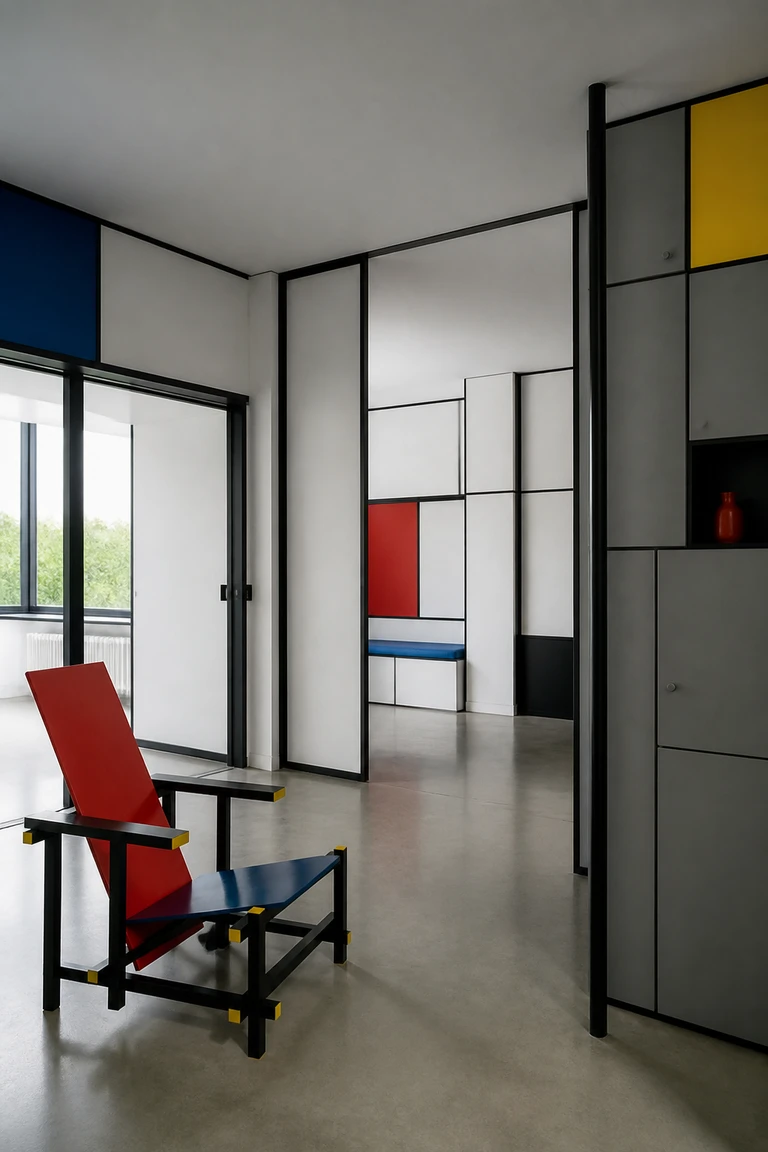
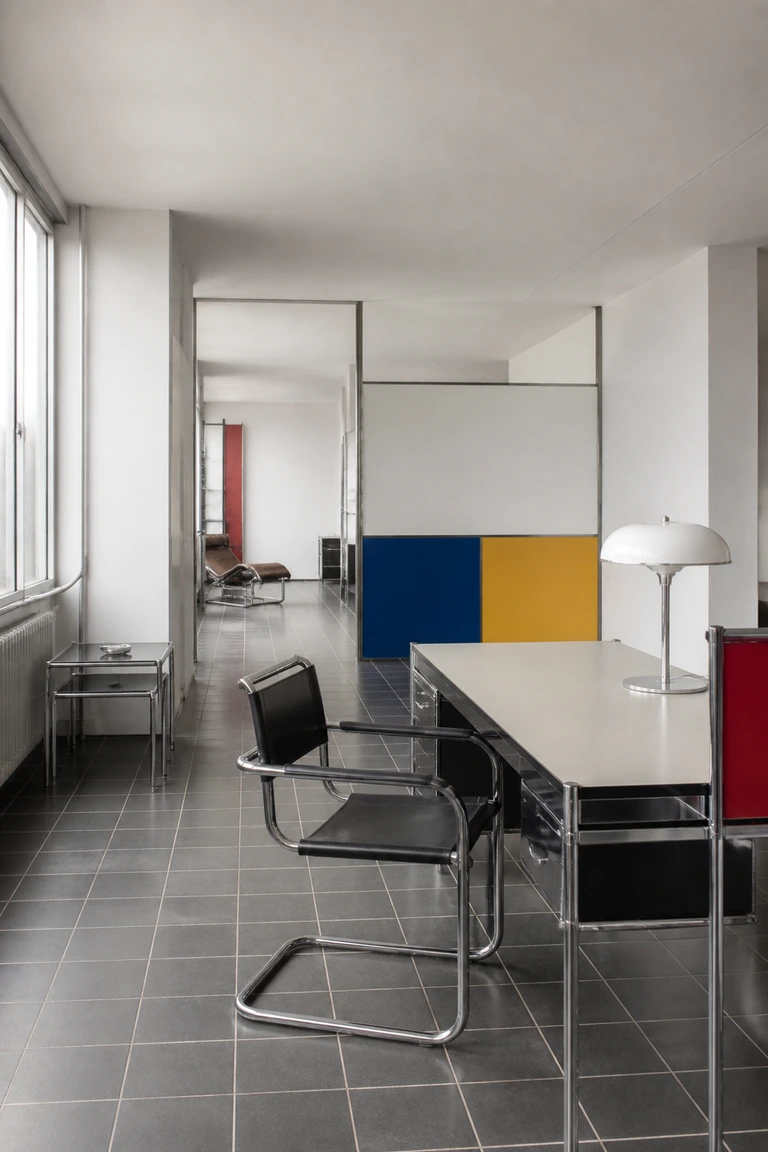
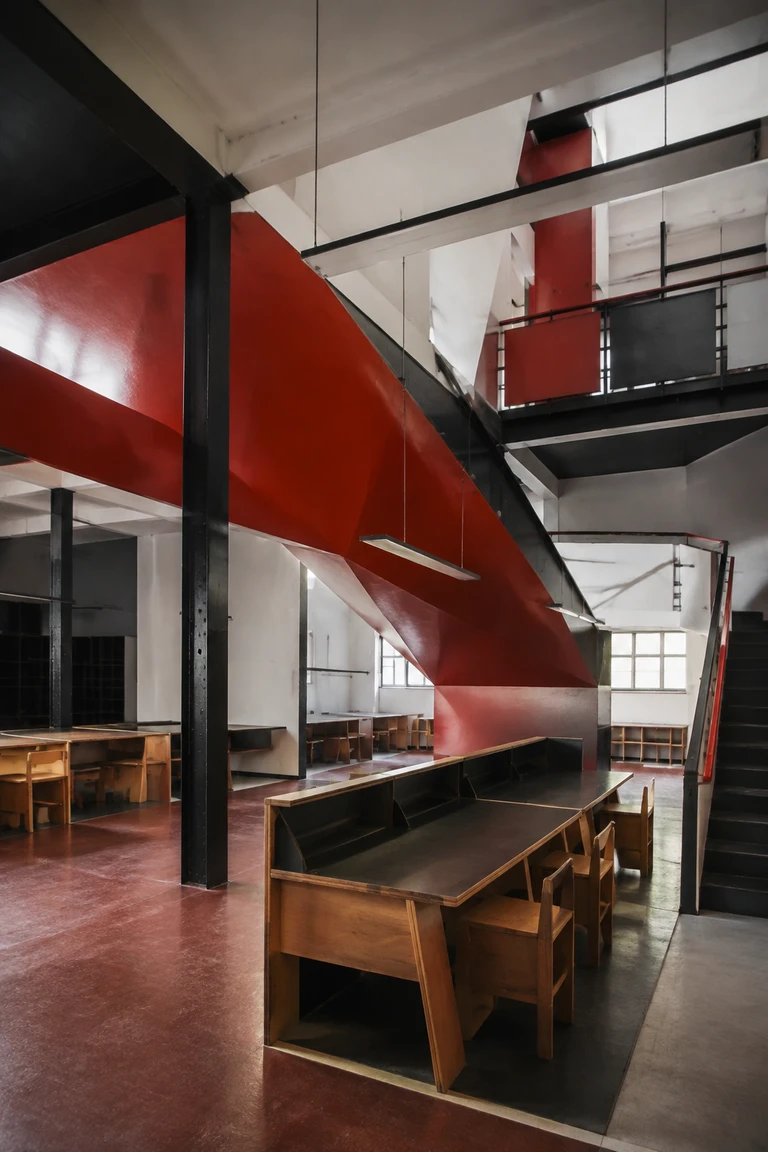
Constructivism interiors organize collective activity through exposed structure, dynamic geometry, economical materials, modular furniture, and sharply directional colour.
- Archive
- 215
- Mood
- Architectural and formal
02 Field note
How the room is composed
- layout
- Diagonal stairs, open frames, transformable platforms, and zoned work or reading tables prioritize movement and shared programs over conventional domestic symmetry.
- materials
- Painted steel, plywood, white plaster, linoleum, glass, canvas, and standardized hardware make construction legible while supporting economical fabrication and reconfiguration.
- furniture
- Stackable chairs, folding tables, modular reading stations, built-in display racks, and angular benches serve multiple collective uses with minimal material and visual weight.
- lighting
- Large factory-like windows, suspended linear fittings, geometric shades, and exposed electrical routes distribute practical light as another visible component of the system.
- decoration
- Red and black planes, diagonals, structural lettering forms without readable text, and repeated circles or bars act as spatial orientation rather than applied luxury.
03 Related rooms
Continue across shared lineages
Neighbors combine mood, historical chapter, material routes, and overlapping palette families.