Decorative and eclectic · Lamu and the northern Swahili Coast · 18th–19th centuries
Swahili stone house
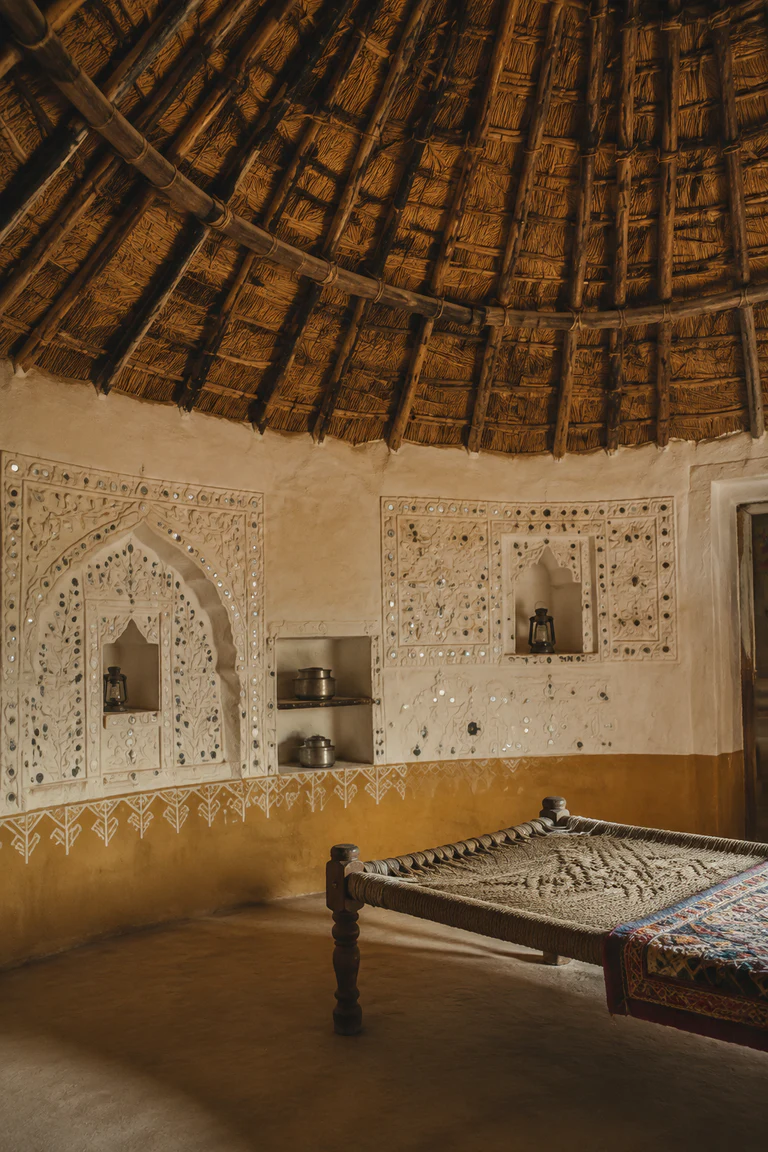
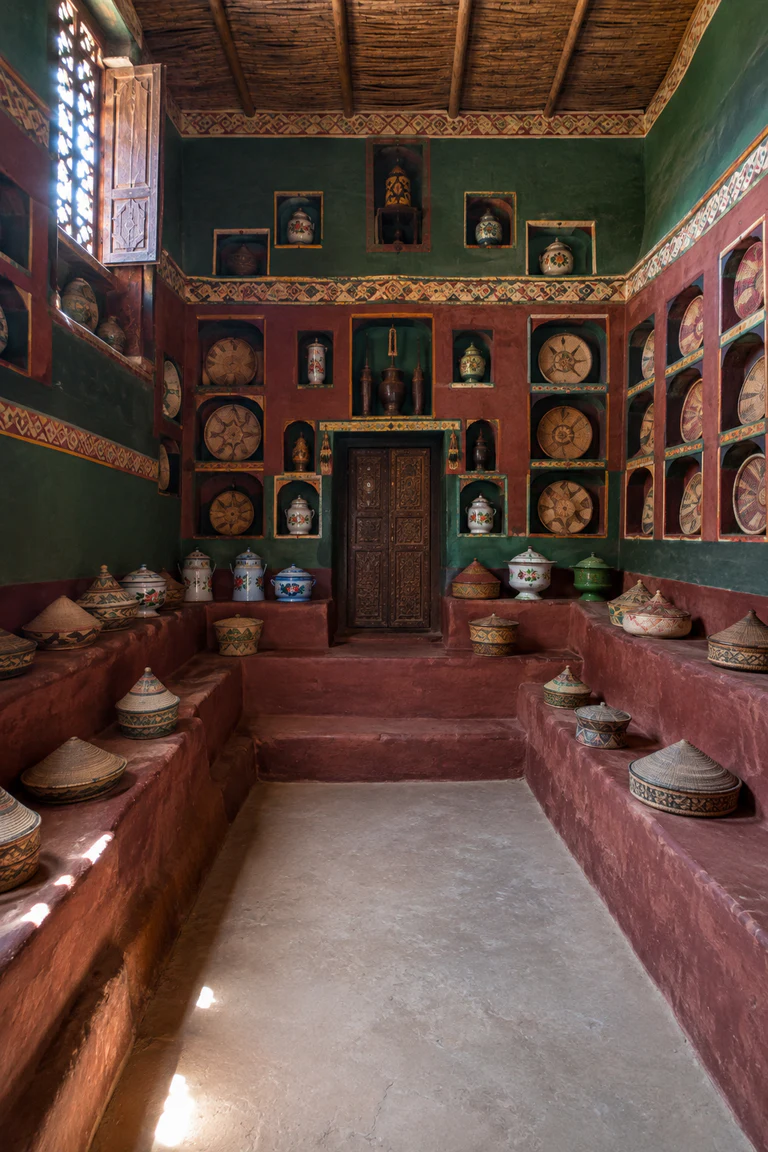
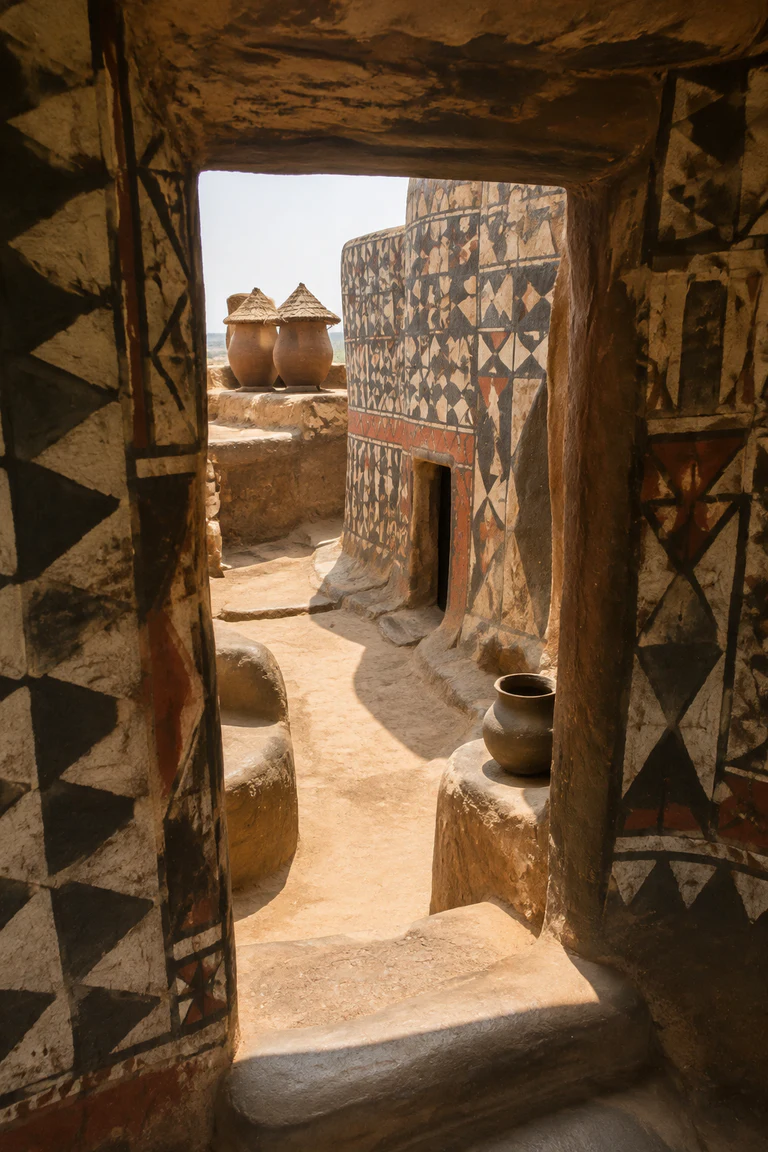
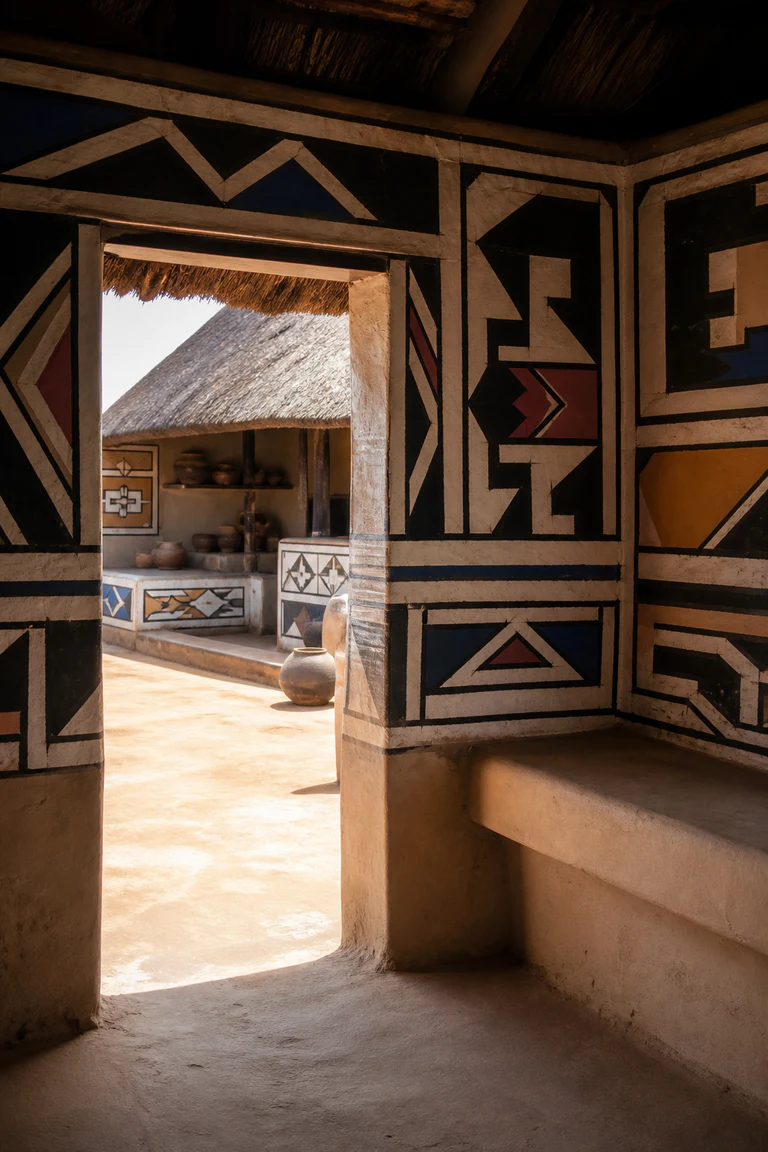
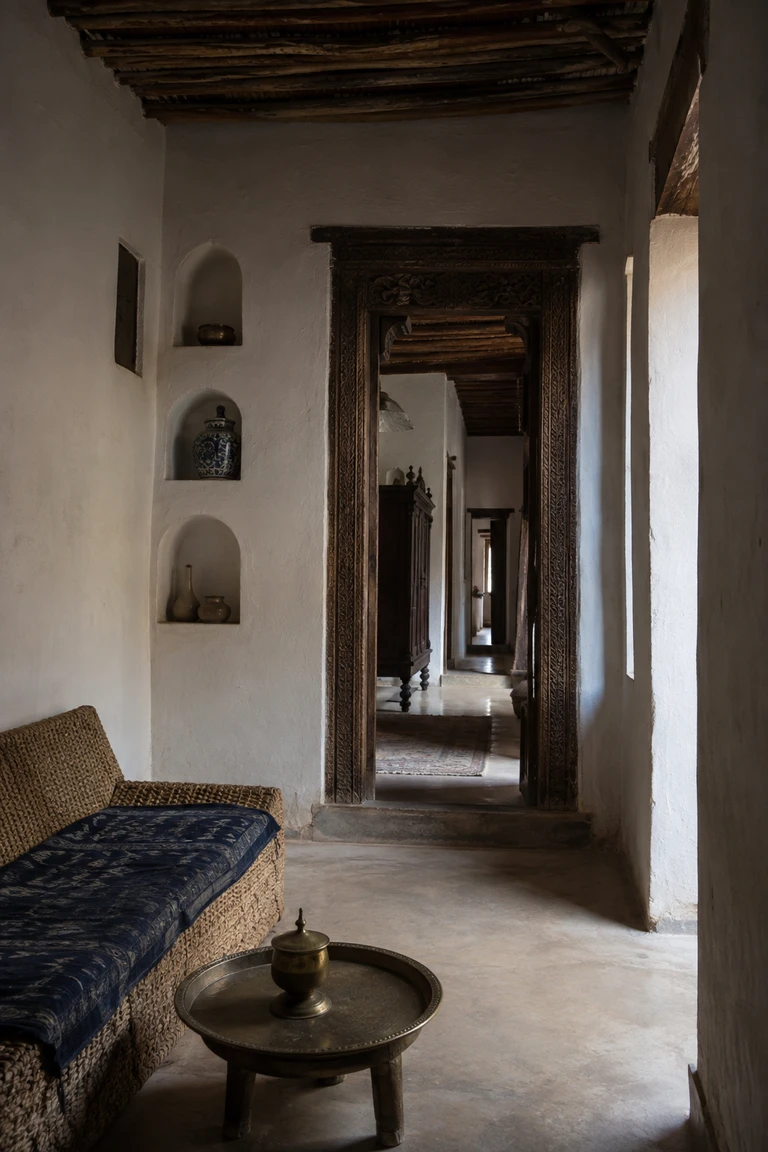
Swahili stone house interiors express Indian Ocean mercantile life through deep coral-stone rooms, carved thresholds, plaster display niches, mangrove ceilings, and controlled layers of household privacy.
- Archive
- 163
- Mood
- Decorative and eclectic
02 Field note
How the room is composed
- layout
- Deep narrow rooms progress from a richly marked public threshold toward increasingly private courts, using aligned doorways, changes in width, and wall niches to organize reception, display, and family life.
- materials
- Coral rag, lime plaster, mangrove poles, carved hardwood, woven palm, brass, ceramic, cotton, and indigo-dyed cloth join coastal construction with Indian Ocean exchange.
- furniture
- Low woven seating, carved chests, stools, trays, mats, and restrained shelving preserve clear passage through narrow rooms while placing household objects within wall niches.
- lighting
- Slanting courtyard daylight travels across thick white walls and deep thresholds, alternating brilliant plaster with cool shade beneath the rhythmic mangrove-pole ceiling.
- decoration
- Vidaka niches, one carved door, ceramics, brass, woven surfaces, and muted indigo create depth and status without importing generalized North African motifs.
03 Related rooms
Continue across shared lineages
Neighbors combine mood, historical chapter, material routes, and overlapping palette families.