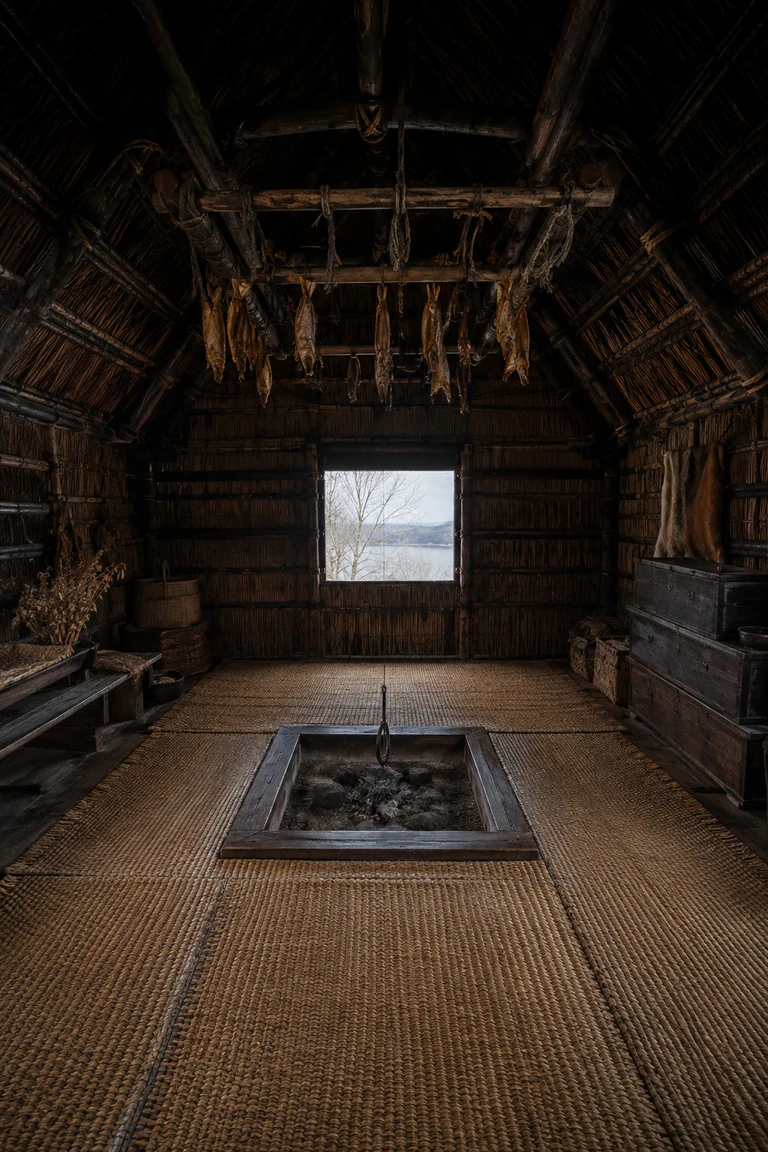
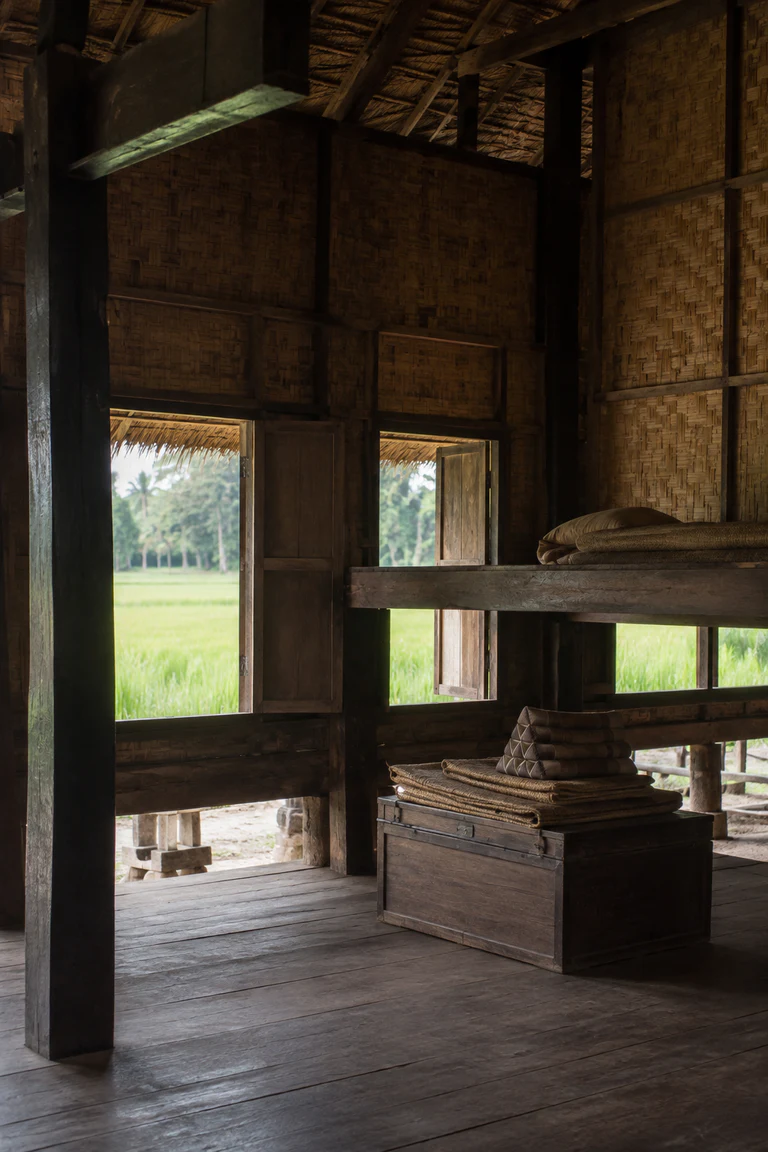
Minimal and natural · Japan · Muromachi–Edo periods
Japanese shoin
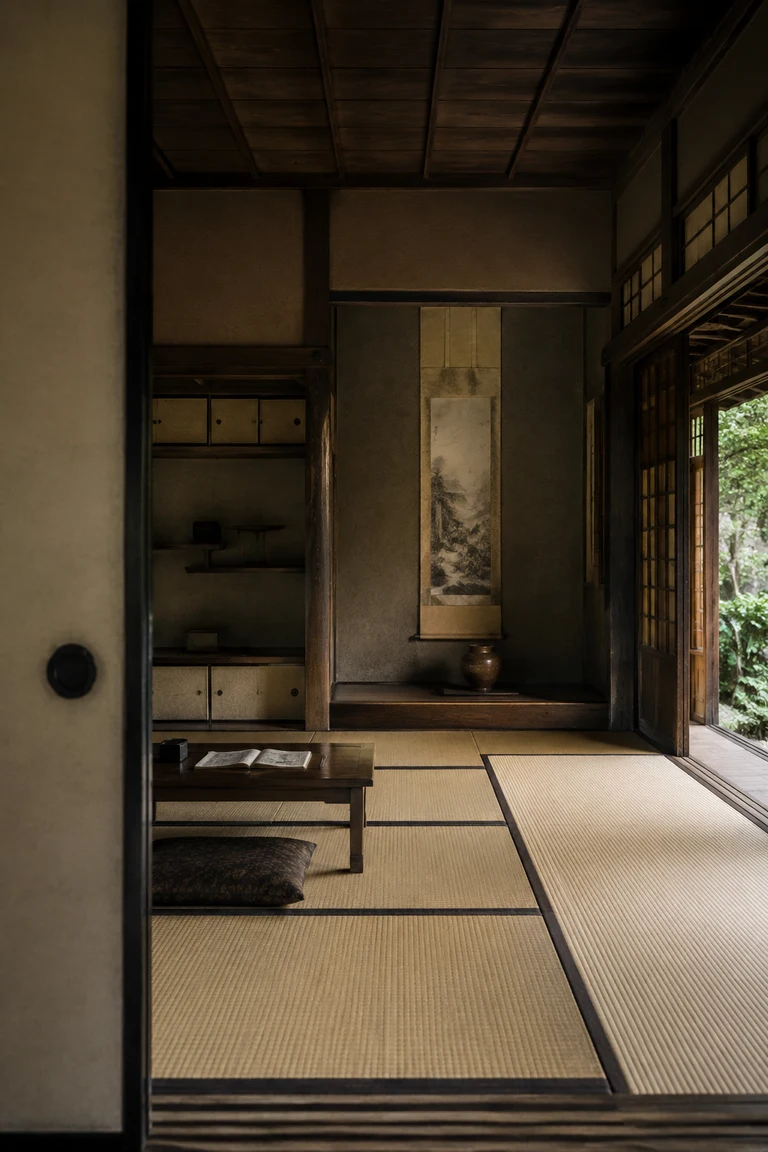
Japanese shoin interiors organize formal domestic life through exact tatami modules, expressed timber bays, sliding painted panels, and a carefully composed tokonoma alcove.
- Archive
- 20
- Mood
- Minimal and natural
02 Field note
How the room is composed
- layout
- Tatami proportions, staggered shelving, aligned sliding partitions, and a ranked relationship to the tokonoma create rooms whose formality is legible through position and approach.
- materials
- Cypress and cedar, tatami rush, clay plaster, washi, dark lacquer, silk brocade, ink, stone, and restrained metal fittings make fine workmanship visible without excess surface noise.
- furniture
- Low writing desks, floor cushions, portable trays, document boxes, and discreet shelves keep the centre open while supporting study, ceremony, and carefully ordered display.
- lighting
- Deep eaves, shoji, translucent fusuma edges, garden reflection, and small paper lanterns produce graduated light that clarifies the timber grid and alcove depth.
- decoration
- One hanging scroll, a seasonal branch, a ceramic vessel, and selectively painted sliding panels concentrate meaning within prescribed architectural frames.
03 Related rooms
Continue across shared lineages
Neighbors combine mood, historical chapter, material routes, and overlapping palette families.