Regional and rustic · South Africa · 17th–19th century lineage
Cape Dutch
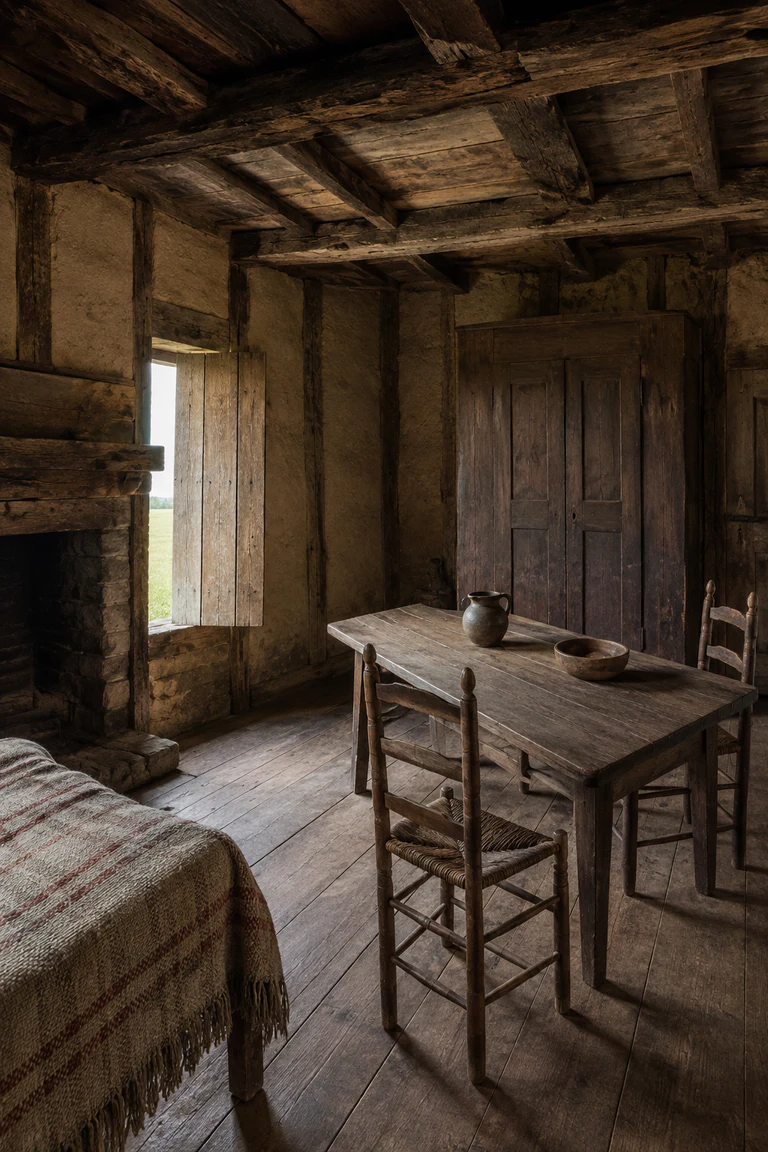
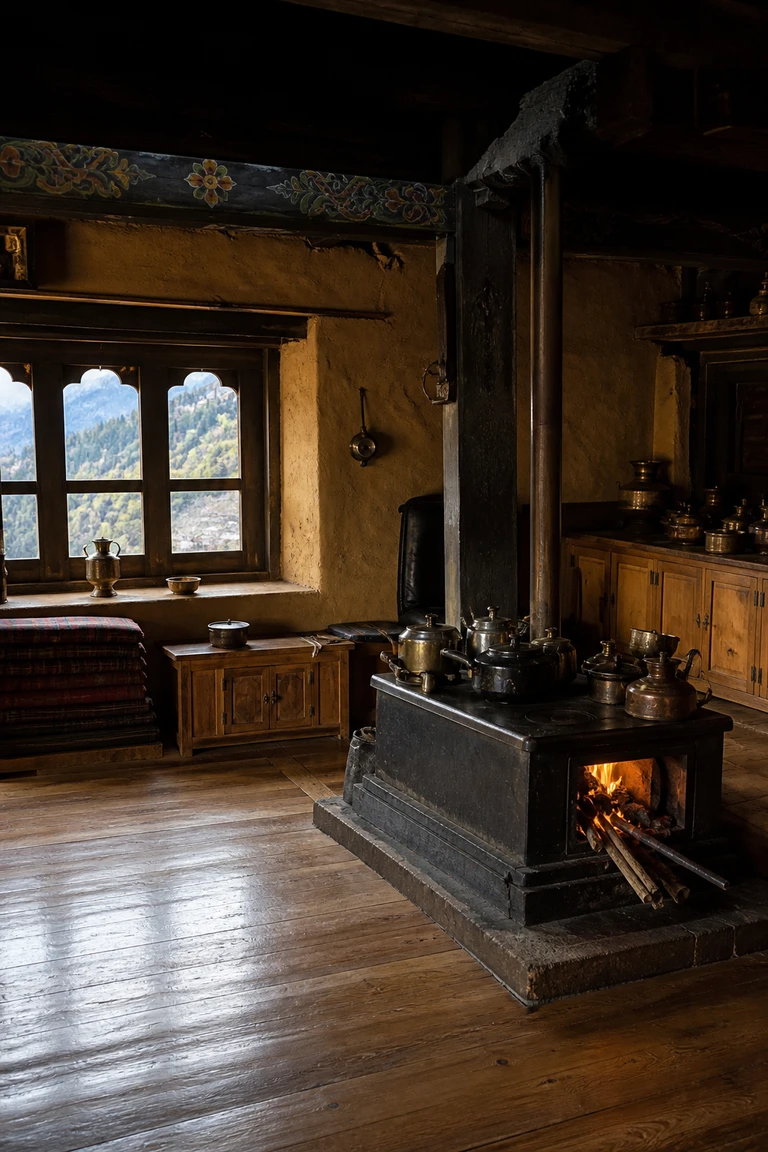
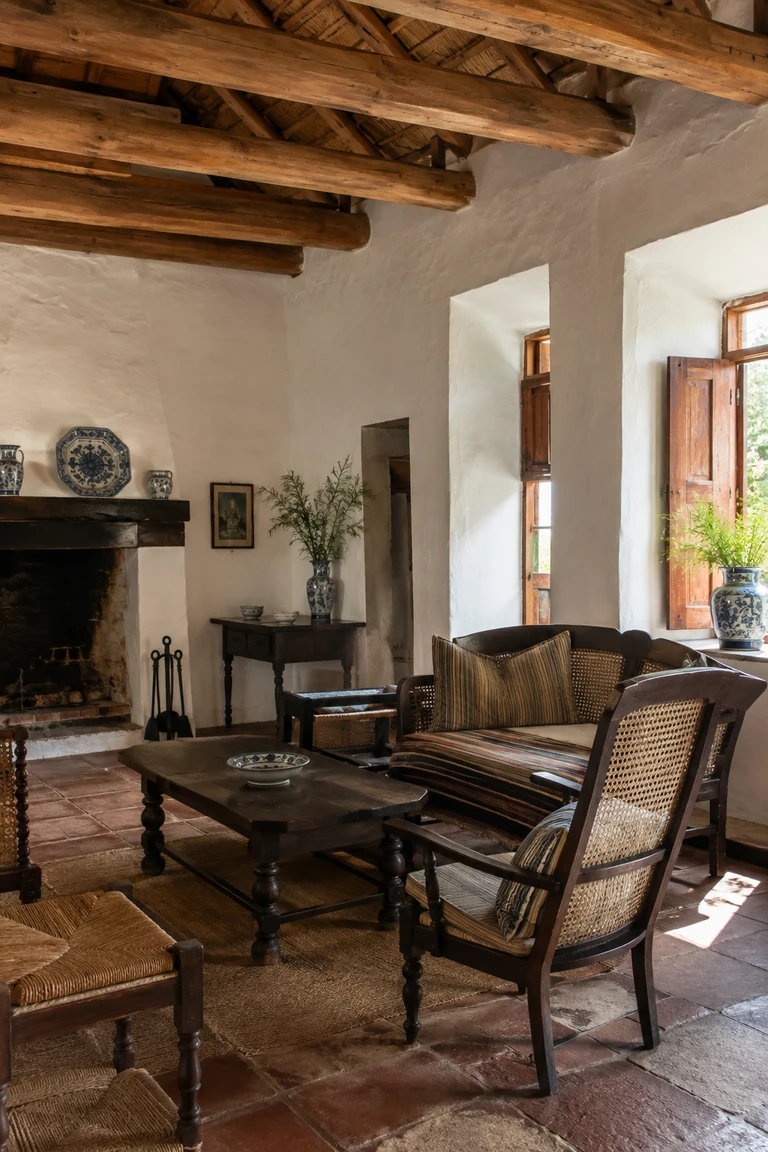
Cape Dutch interiors combine thick limewashed masonry, deep timber windows, broad ceiling beams, locally made hardwood furniture, and practical cross-cultural craft traditions.
- Archive
- 81
- Mood
- Regional and rustic
02 Field note
How the room is composed
- layout
- Deep rooms align around a central passage and substantial hearth, with window seats, freestanding furniture groups, and thick thresholds moderating heat and strong daylight.
- materials
- Lime plaster, yellowwood beams, stinkwood or other dark hardwood, terracotta, local stone, woven rush, cane, linen, and hand-painted ceramic carry regional durability.
- furniture
- Turned-leg tables, high-backed cane chairs, storage chests, rush stools, and dark timber settees pair European forms with local woods and workshop adaptation.
- lighting
- Deep-set shuttered windows control glare, while forged sconces, brass candle fittings, and simple pendants concentrate warm light around tables and the hearth.
- decoration
- Blue-and-white ceramics, striped handwoven textiles, baskets, restrained botanical objects, and visible joinery enrich white walls without obscuring the room’s practical structure.
03 Related rooms
Continue across shared lineages
Neighbors combine mood, historical chapter, material routes, and overlapping palette families.