Minimal and natural · Japan · 16th century onward
Japanese sukiya
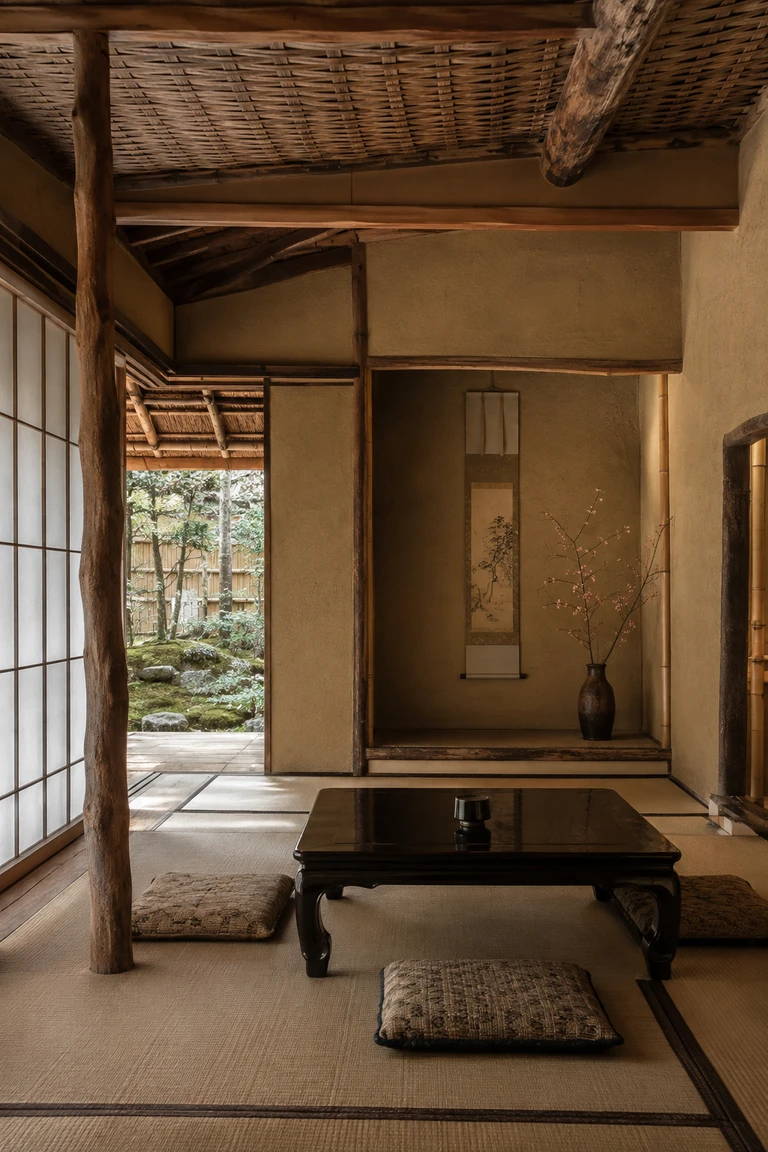
Japanese sukiya interiors refine domestic space through tatami proportion, lightly expressed timber, asymmetrical alcoves, filtered garden light, and deliberate material irregularity.
- Archive
- 18
- Mood
- Minimal and natural
02 Field note
How the room is composed
- layout
- Tatami modules organize low rooms around sliding partitions, a tokonoma alcove, and oblique garden views, allowing circulation and enclosure to change with season and occasion.
- materials
- Cedar, cypress, bamboo, clay plaster, washi, tatami rush, dark lacquer, stone, woven fibre, and intentionally irregular natural posts balance precision with cultivated imperfection.
- furniture
- Low lacquered tables, portable trays, floor cushions, small writing stands, tea utensils, and discreet built-in shelving preserve open floor area and a calm horizontal datum.
- lighting
- Deep eaves, shoji, bamboo blinds, reflected garden light, paper lanterns, and small shaded lamps produce soft gradients rather than uniform brightness.
- decoration
- A seasonal branch, one hanging scroll, a flower vessel, and a few tea objects focus attention within the tokonoma while leaving the surrounding room visually spare.
03 Related rooms
Continue across shared lineages
Neighbors combine mood, historical chapter, material routes, and overlapping palette families.